


10+ Years of Trusted Food Supply

Belgium-run Business

Belaur is a Belgian food ingredients manufacturer producing chocolates, dairy products, and all baking and pastry-related items.


Belaur is an employee-owned, customer-focused brand, part of the Belgian Food Processing Group headquartered in Ghent, Belgium.


It has been operating since 1995 and maintains three production facilities across Belgium.


We strive to deliver high-quality, BRCGS-certified ingredients to B2B food brands, bakeries, and distributors throughout the world.

Explore Our Product Categories

High-quality ingredients crafted for food brands, bakeries, manufacturers, and global distributors.

Why do you want to work with us ?

Thanks to our technical know-how and expertise, we were able to create tailor-made ingredients, which are optimally adapted to the requirements of our customers. 


Whether it is a product solution for the perfect use in the professional kitchen, or as a customised complete service in the industrial or co-manufacturing sector.  We always aim for a top notch excellent quality.


To guarantee this, regular, strict audits are carried out in all factories, and for all areas, in accordance with the relevant quality, environmental and social standards.

Resources

Download Our Product Catalogue

Get full specifications, product details, and technical information in one place.

FAQs

About Belaur & Certifications 3 questions
1. What food ingredients does Belaur manufacture?

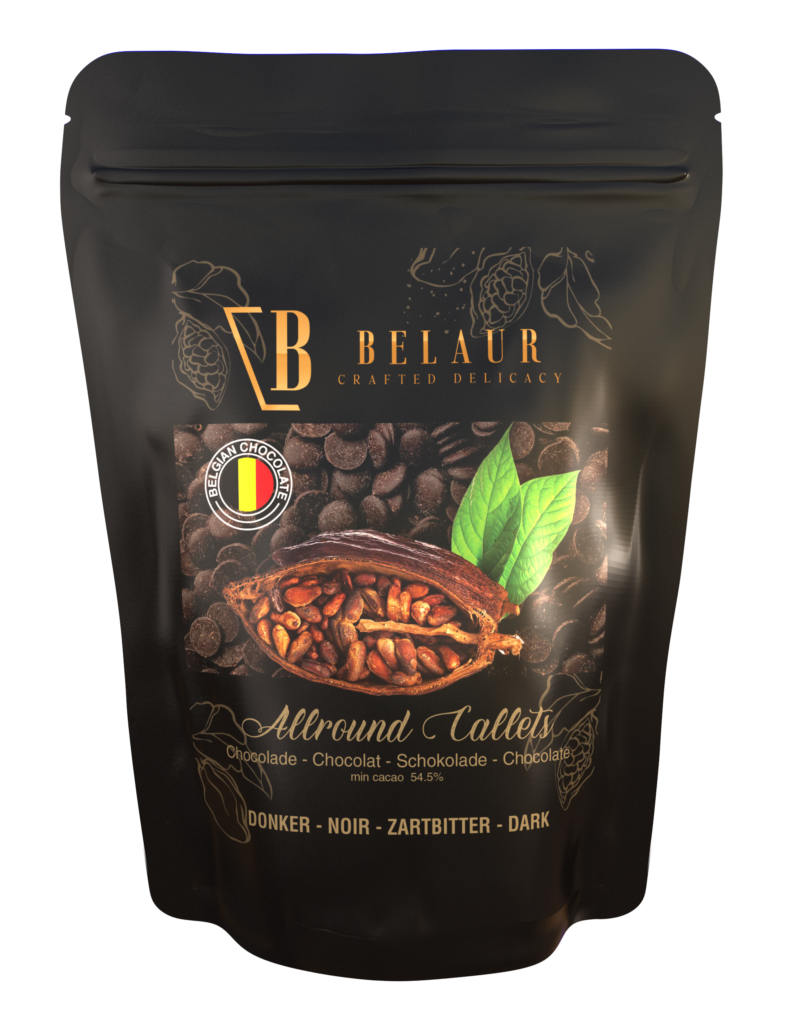
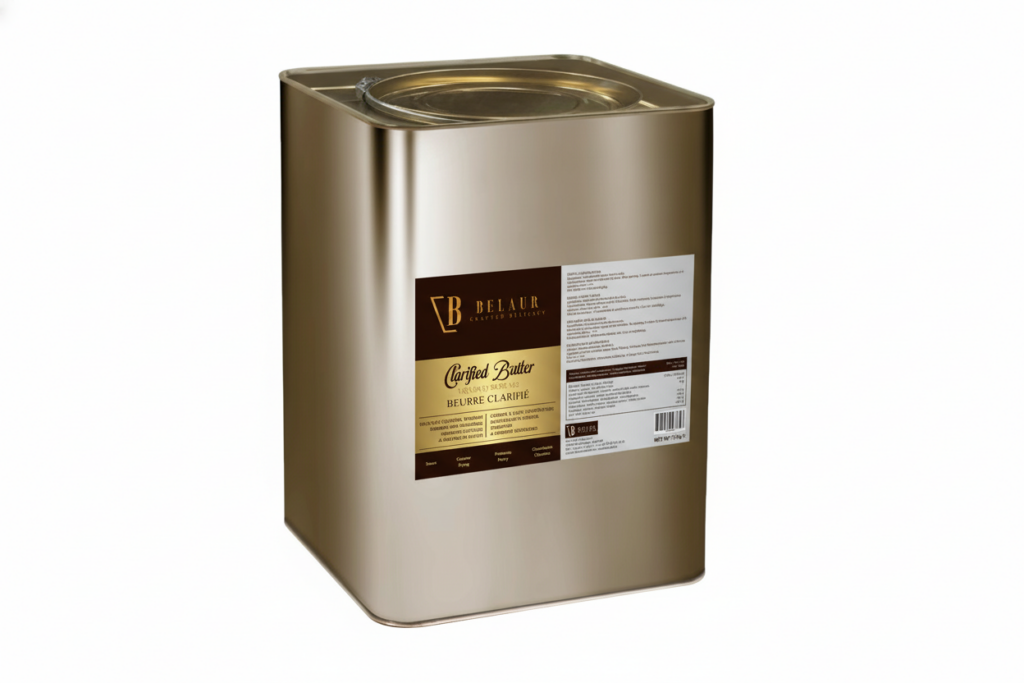
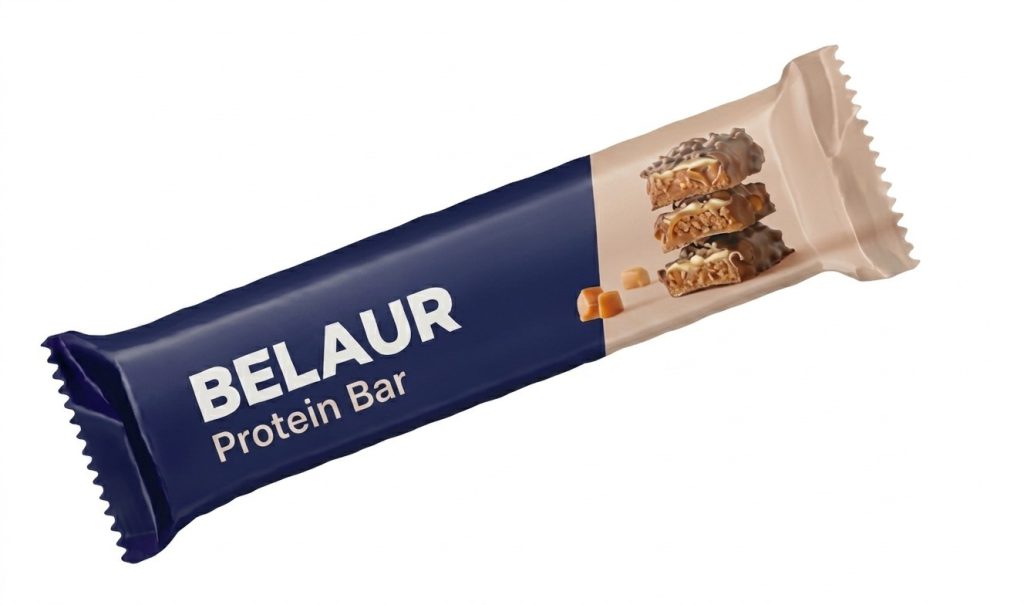
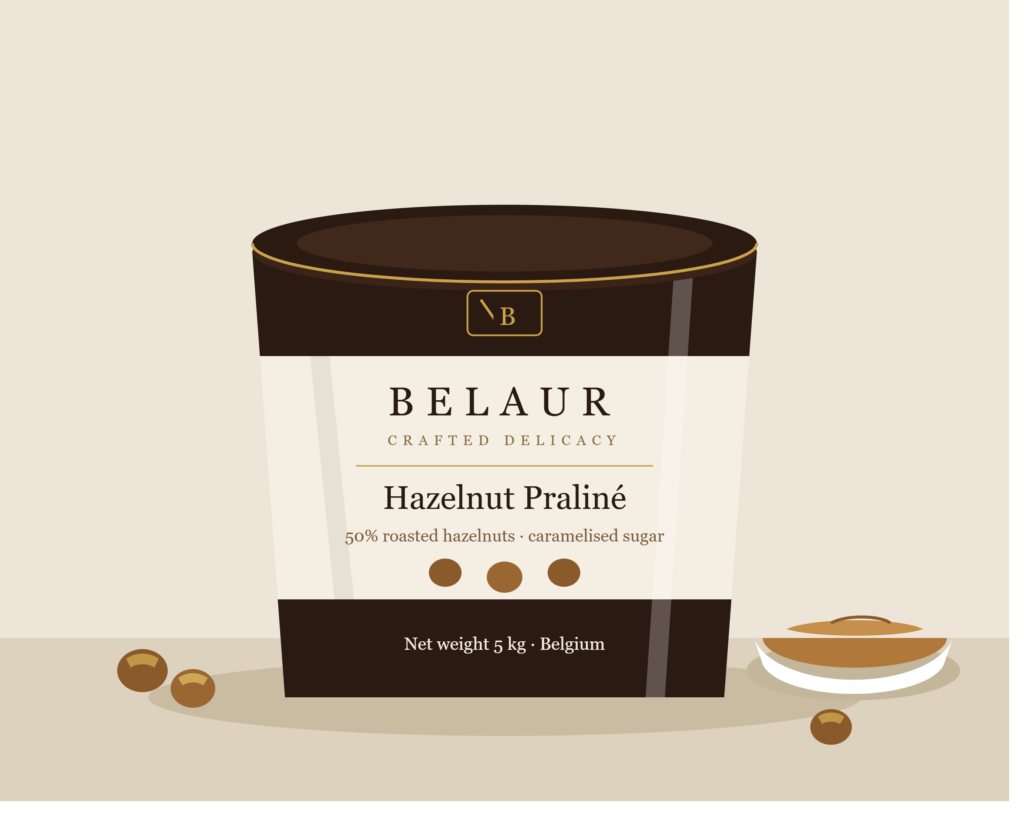
Belaur is a Belgian food ingredients manufacturer producing dairy, chocolate, and baking ingredients in bulk and wholesale quantities, including tourage (laminating) butter, chocolate callets, cocoa mass and cocoa butter, cooking and whipping creams, sour cream, hazelnut praliné, baking mixes, frozen croissants, protein bars, and shelf-stable yogurt — supplied to bakeries, foodservice operators, distributors, and industrial food manufacturers worldwide.

2. Where are Belaur products manufactured?

Belaur products are manufactured in Belgium across three production facilities, as part of the Belgian Food Processing Group headquartered in Ghent. Our head office is located at Kattestraat 36, 9300 Aalst, Belgium.

3. Is Belaur BRCGS certified?

Yes. Belaur’s products are produced according to BRCGS quality standards, one of the leading globally recognized food safety certification schemes, meaning our facilities undergo regular audits covering food safety, quality, and process control.

Products Explained 3 questions
4. What is tourage butter and why is it used in croissants?

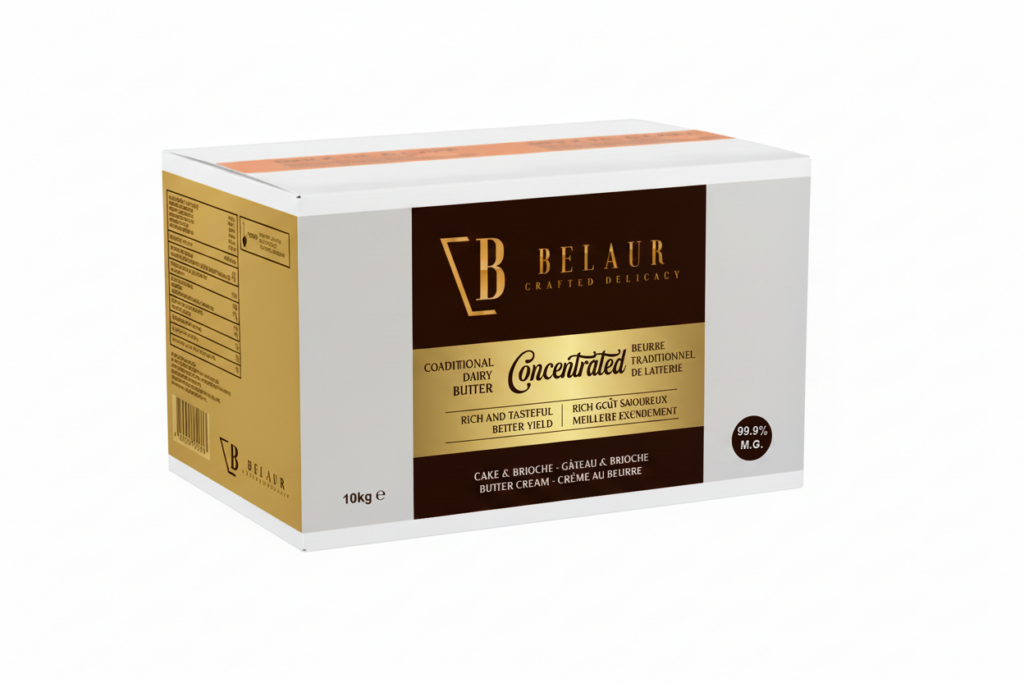
Tourage butter is a laminating butter formulated with a higher melting point so it stays firm and pliable during the folding (“turning”) process used to make croissants, puff pastry, and viennoiserie. This keeps distinct, even butter layers intact through lamination and baking, producing the flaky texture professional bakeries expect at scale.

5. What is the difference between Belaur’s cooking cream options?

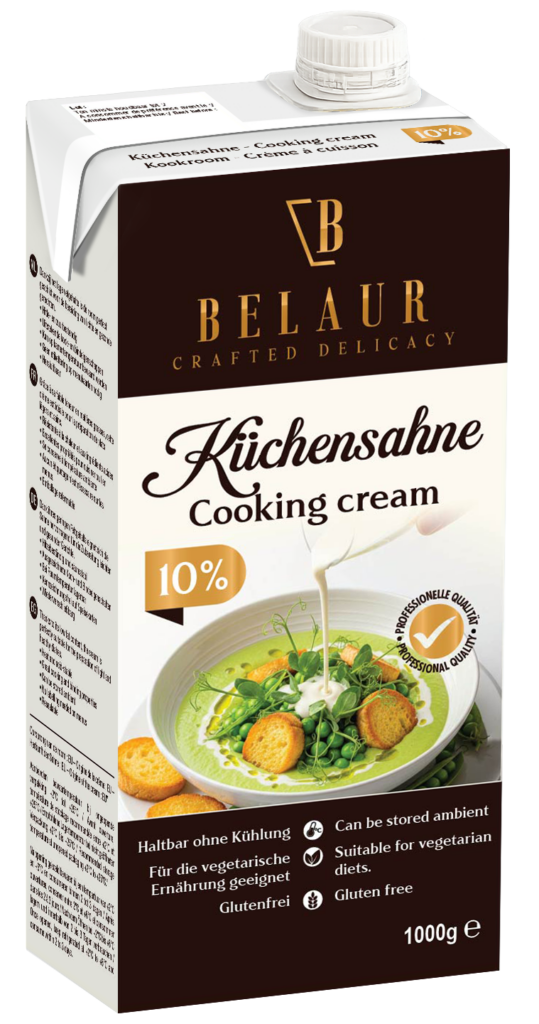
Belaur’s cooking cream range spans light cooking cream (10% fat), a versatile all-purpose cooking cream (20% fat), and double cream (45% fat) for whipping, sauces, and desserts — plus a certified organic, plant-based oat cooking cream (13%) for dairy-free menus. The right choice depends on whether you need pourable texture, whipping volume, or heat/acid stability for a specific application.

6. Do Belaur’s ambient/shelf-stable products need refrigeration?

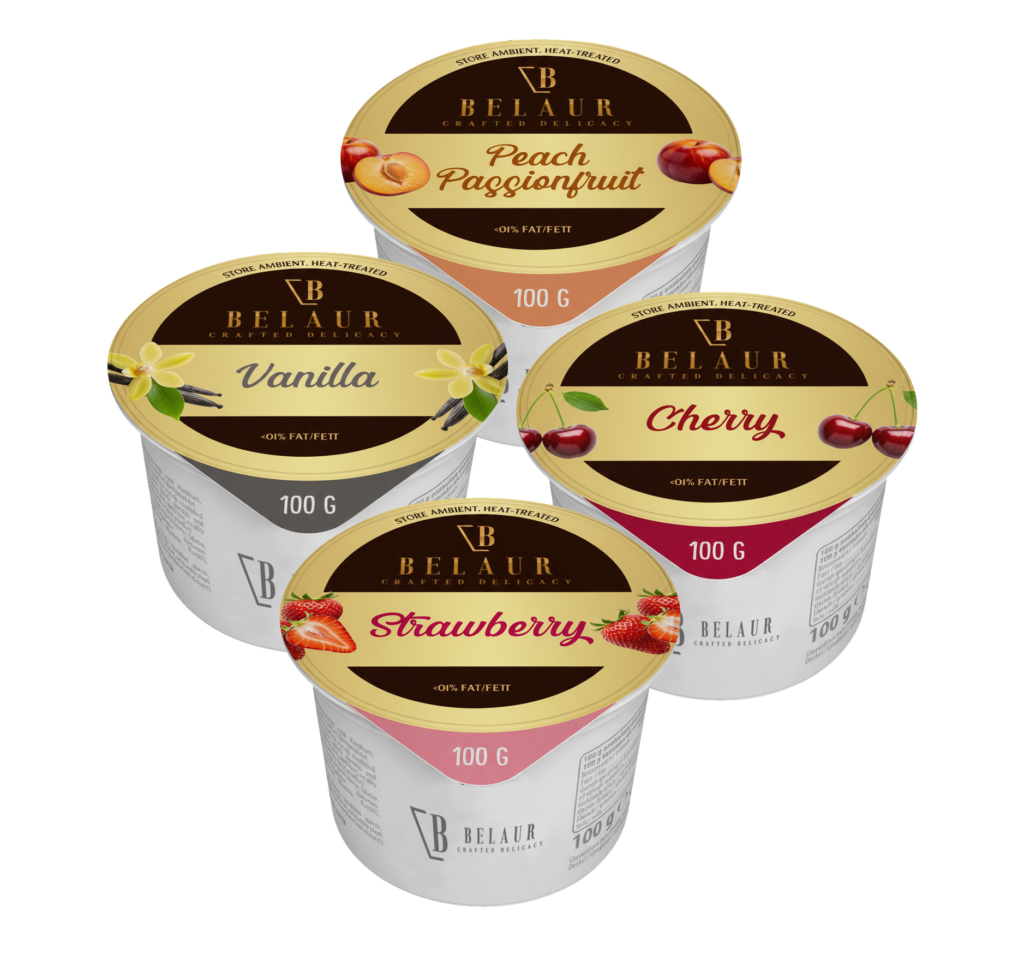
No — several Belaur products, including our long-life whipping cream and shelf-stable fruit yogurt, are heat-treated for ambient storage and do not require refrigeration until opened, making them well suited to stockpiling, catering logistics, and export.

Butter Knowledge 12 questions
7. Why is butter such an important ingredient in professional kitchens?

Butter does more than add richness — it carries flavor, builds structure in laminated doughs, and helps create the browning and aroma that define baked goods. For professional bakeries working at volume, a stable, purpose-built butter like Belaur’stourage butter is what keeps that performance consistent across every batch.

8. Is there a National Butter Day?

Yes — National Butter Day is marked each year on November 17th, a nod to how central butter has been to home and professional baking for generations. It’s a good reminder of just how much craft goes into a product many people take for granted.

9. Why does butter color vary between batches?

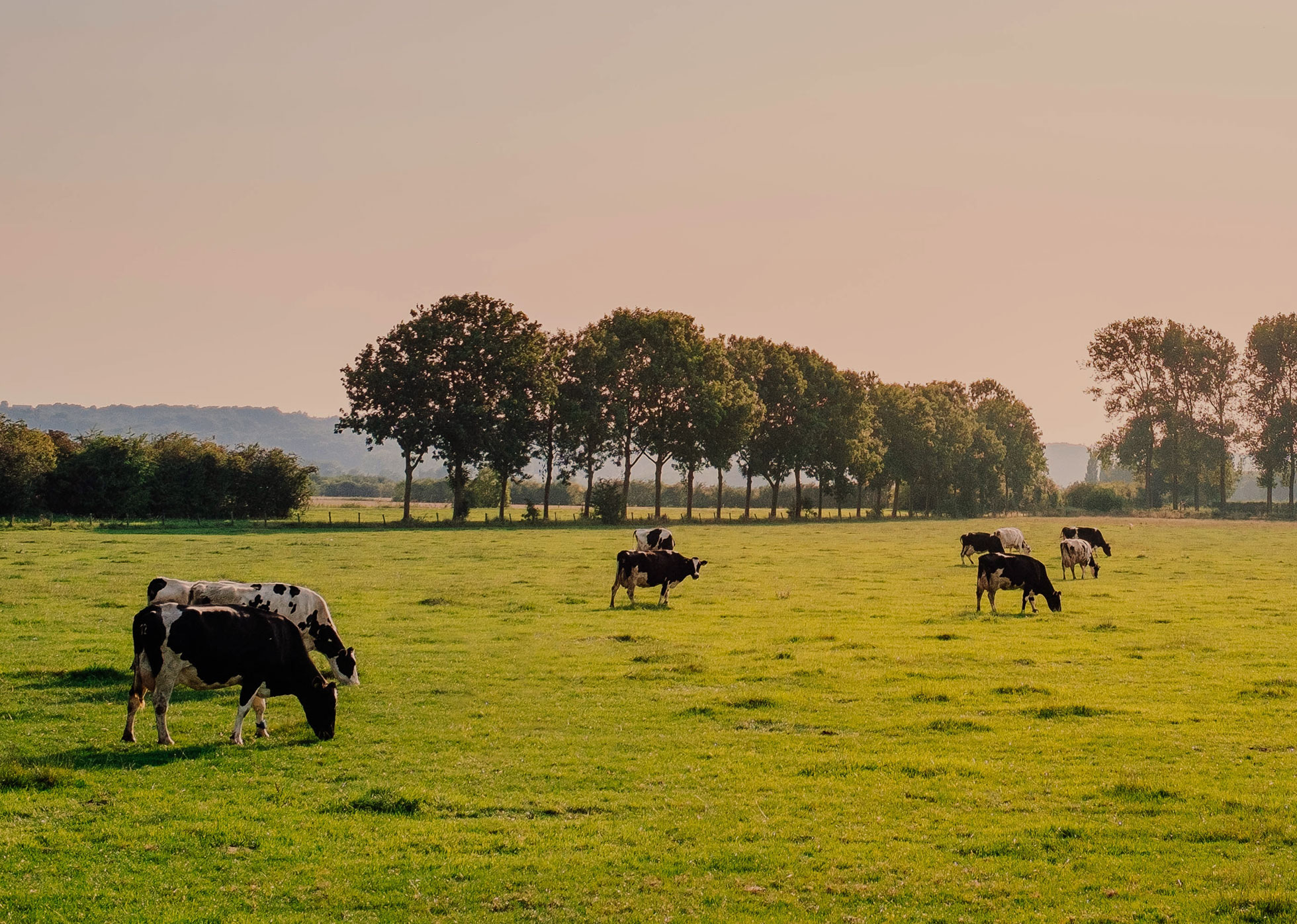
Butter’s color comes largely from the diet of the dairy cows that produce the cream it’s made from. Cows grazing on fresh grass consume more beta-carotene, which produces a deeper yellow butter, while grain-fed herds typically yield a paler product. Belaur sources cream to maintain consistent color and quality across production runs, so batch-to-batch variation stays minimal for industrial buyers.

10. What’s the difference between European-style and American butter?

The main difference is fat content and churning time. European-style butter is churned longer and typically contains 82–90% fat, giving it a denser texture and richer flavor, compared to the roughly 80% fat standard common in American butter. That extra fat and churn time is part of why European-style butter performs differently in lamination — closer to what Belaur’stourage butter is formulated to deliver for croissants and pastry.

11. Why have butter prices risen in recent years?

Global butter prices have climbed due to a mix of rising demand, tighter milk supply in some regions, and higher costs for feed, labor, and transport across the dairy supply chain. Some countries maintain national butter reserves specifically to smooth out these price swings when supply tightens.

12. How is butter made, from cream to block?

Butter production starts with pasteurizing fresh cream to eliminate bacteria, then cooling and churning it until the fat separates from the buttermilk. The remaining fat is worked to remove excess liquid, salted if required, then shaped and packaged. Industrial production follows the same core stages as traditional churning, scaled up with tighter temperature and consistency controls — the kind of process Belaur runs across its Belgian facilities to keep every batch to spec.

13. What makes butter’s fat composition unique?

Butter is roughly 80% fat, made up mainly of saturated fat alongside smaller amounts of monounsaturated and polyunsaturated fats, plus fat-soluble vitamins A, D, E, and K. That composition is part of why butter behaves so differently from oils or margarine in baking, contributing to the flakiness and richness professional bakers rely on.

14. How does temperature affect butter’s texture and flavor?

Butter softens at room temperature, firms when chilled, and changes character entirely under heat. Browning butter triggers a Maillard reaction that develops a deep, nutty flavor, while clarifying it (removing the milk solids) raises its smoke point for higher-heat cooking. Getting temperature right at each stage — from storage through lamination to baking — is central to consistent results in professional kitchens.

15. What types of butter are available?

Common types include sweet cream butter (the standard all-purpose option), salted and unsalted butter, and European-style butter with a higher fat content and denser texture. Specialty options like flavored or compound butters add other ingredients for specific applications. Belaur’stourage butter falls into the higher-fat, laminating-grade category, purpose-built for croissants and puff pastry rather than table use.

16. How does butter enhance flavor and aroma in cooking?

Butter acts as a flavor carrier — its fat helps release and amplify the aromatic compounds in herbs, spices, and other ingredients, while contributing its own rich, savory notes. The aroma released during cooking or baking is part of what makes butter-based products feel indulgent, and it plays a direct role in how bakeries and foodservice customers perceive product quality.

17. What’s fact vs. myth in butter’s nutritional profile?

Butter has often been singled out for its saturated fat content, but current research suggests the relationship between saturated fat and heart health is more nuanced than once assumed. Butter also supplies fat-soluble vitamins and short-chain fatty acids linked to gut health. As with most foods, quality and moderation matter more than treating butter as simply “good” or “bad.”

18. How does butter compare nutritionally to margarine?

Butter is a single-ingredient dairy product, while margarine is typically made from blended vegetable oils, emulsifiers, and additives. Butter is higher in saturated fat; margarine varies more depending on formulation, and some contain trans fats while others are formulated without them. Many professional bakers still choose butter for lamination specifically for the flavor and texture it delivers, which formulated margarines can approximate but rarely fully replicate.

Chocolate Chip (Callet) Knowledge 3 questions
19. What are chocolate callets and how do they differ from regular chocolate chips?

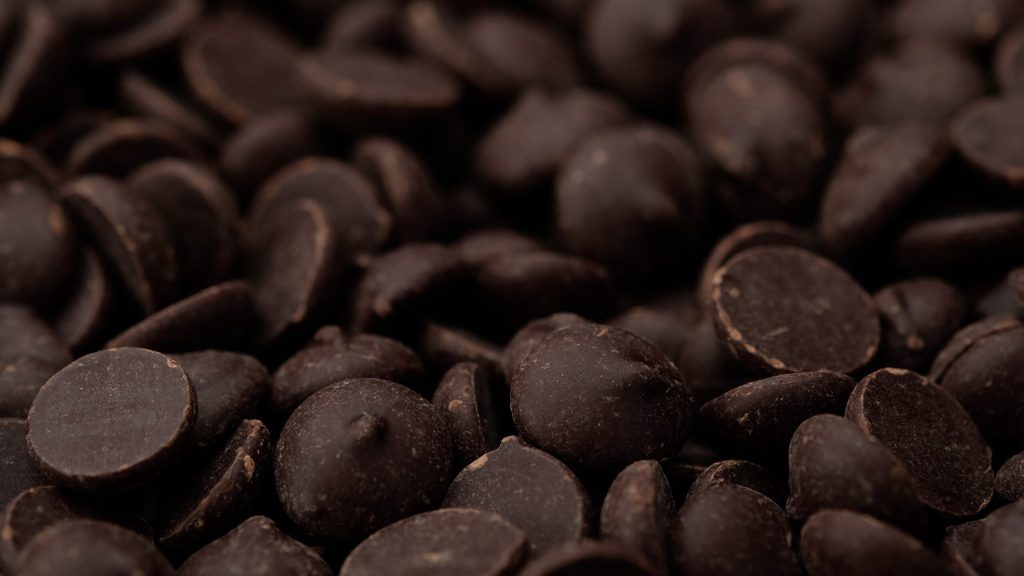
Callets are small, flat discs of couverture chocolate that function like chocolate chips but are formulated with a higher cocoa butter content for smoother melting and better flow in industrial applications. Belaur’s chocolate callets are designed to hold their shape at moderate oven temperatures while melting evenly when needed for coatings, fillings, or enrobing.

20. When should I choose chocolate callets over chopped chocolate blocks?

Callets are pre-portioned and melt more evenly than hand-chopped chocolate, which can vary in piece size and melt unevenly. For bakeries and manufacturers running high-volume production, callets save prep time and give more consistent results in tempering, dipping, and baked-in applications like cookies and muffins.

21. Do chocolate callets hold their shape when baked?

Yes — depending on the couverture formulation, chocolate callets can be engineered to either hold a defined shape through baking (for visible chip inclusions) or melt fully for smooth coatings and ganaches. Belaur’s range covers both applications, so the right callet depends on whether you want texture or a smooth melt in the final product.

Cooking Cream Knowledge 3 questions
28. Can cooking cream be substituted for whipping cream in recipes?

Not always — cooking cream is formulated for heat and acid stability rather than volume, so it won’t whip into stiff peaks the way a higher-fat whipping cream will. For sauces and finishing dishes, cooking cream performs well, but for desserts requiring a whipped texture, a dedicated whipping cream is the better choice.

29. Why does cream sometimes split or curdle in hot sauces?

Cream can split when it’s exposed to high heat combined with acidity (such as wine, tomato, or citrus) without enough fat or stabilization to hold the emulsion together. Cooking creams formulated for heat and acid stability, like Belaur’s range, are designed specifically to resist this in demanding, high-volume kitchen environments.

30. What’s the best cooking cream for a dairy-free menu?

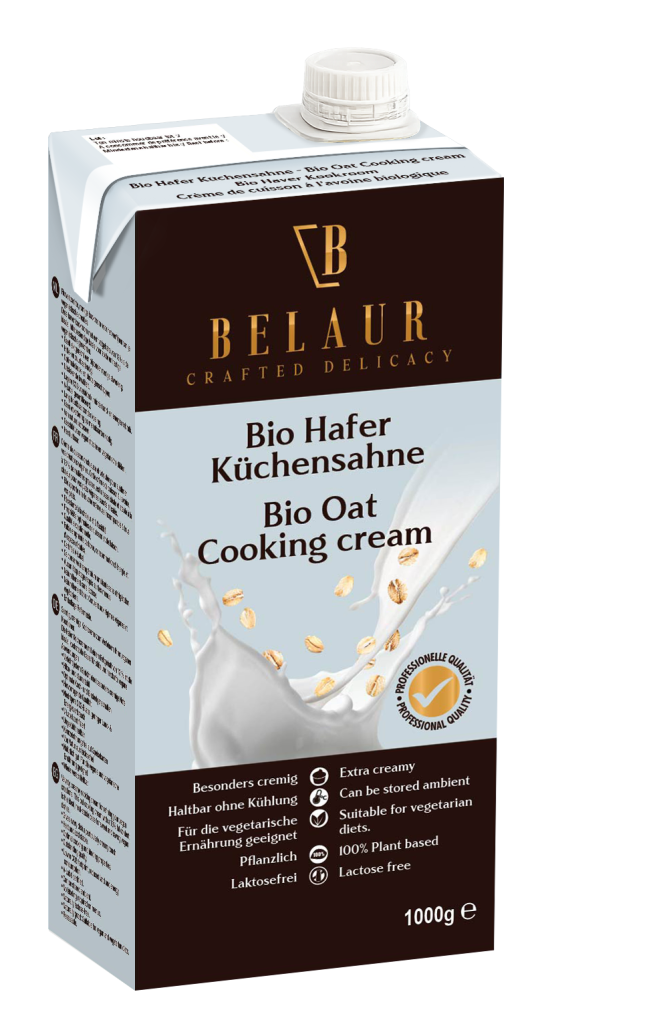
Belaur’s certified organic oat cooking cream (13% fat) is formulated as a dairy-free, plant-based alternative that performs similarly to dairy cooking cream in savory applications, offering comparable heat and acid stability for kitchens serving vegan or lactose-free menus.

Ordering & Customization 4 questions
31. Does Belaur supply on a wholesale or bulk basis?

Yes. Belaur is a B2B, wholesale-only supplier — we manufacture and supply dairy, chocolate, and baking ingredients in bulk for foodservice companies, distributors (serving hotels, restaurants, cafes, patisseries, and bakeries), and industrial food manufacturers, not to individual consumers.

32. Are you open to custom packaging sizes?

Yes, Belaur can accommodate custom packaging sizes and formats for many of our products, tailored to a customer’s operational or retail requirements.

33. Are you open to custom product production (bespoke formulations)?

Yes. Alongside our standard product range, Belaur develops custom formulations and private-label products tailored to a customer’s specifications, recipe requirements, or branding needs — from adapting an existing product to building a new formulation from scratch.

34. What is the minimum order quantity (MOQ) for Belaur products?

Belaur does not enforce a minimum order quantity — orders are flexible to fit your operation. For the most cost-efficient international shipping, we recommend ordering by the container load via the Port of Antwerp.

Shipping & Next Steps 2 questions
35. Does Belaur supply internationally?

Yes. Belaur supplies food brands, distributors, and manufacturers internationally from its Belgian production base. All orders are shipped directly from our facilities in Belgium, including via the Port of Antwerp, for both European and international deliveries.

36. How can I request samples or a quote?

You can request samples, technical specification sheets, or a wholesale quote by submitting the enquiry form on this page or downloading our full product catalogue. Our team will respond with product details tailored to your application.

Sour Cream Knowledge 3 questions
22. What is sour cream used for in professional food production?

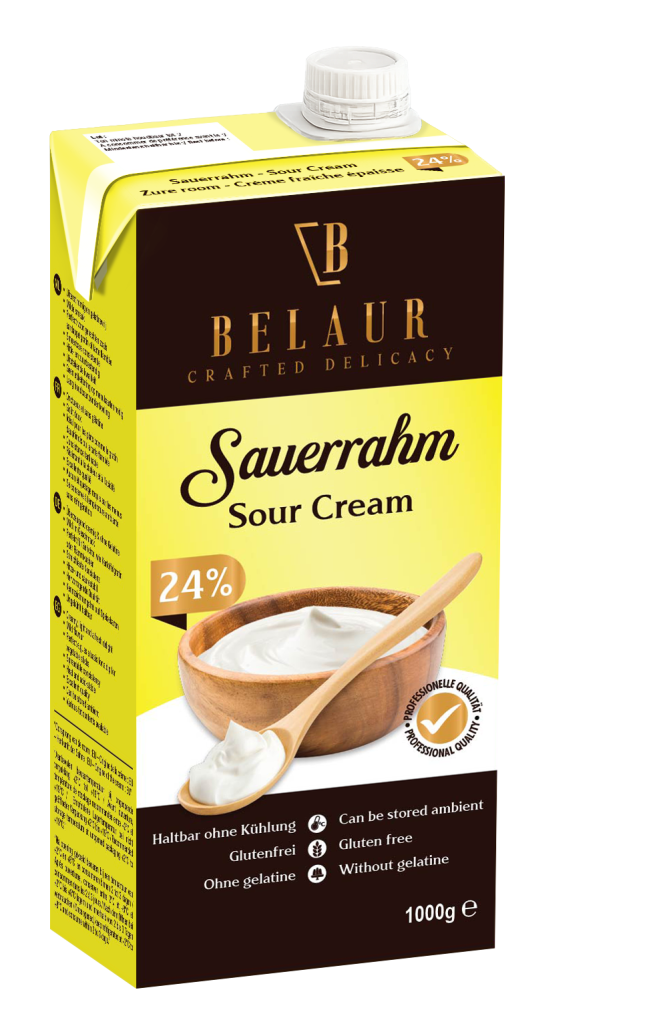
Sour cream is used as a tangy, creamy base in sauces, dips, and baked goods, and as a finishing garnish, and its acidity also helps tenderize batters in baking. In industrial and foodservice settings, its fat content and thickness need to stay consistent batch to batch for recipes that depend on it for texture.

23. What is the difference between sour cream and crème fraîche?

Sour cream is typically lower in fat (around 18–20%) and has a sharper tang from higher acidity, while crème fraîche is richer and milder, with a higher fat content that makes it more heat-stable in cooking. Belaur’s sour cream is formulated for the tangier, thicker profile foodservice and bakery customers expect.

24. Can sour cream be used in baking without curdling?

Yes, when formulated for heat stability, sour cream can be baked into cakes, muffins, and quick breads without curdling, adding moisture and a subtle tang. The key is a stable emulsion that holds up under oven temperatures — worth confirming with your supplier’s technical specification rather than assuming all sour creams perform the same under heat.

Whipping Cream Knowledge 3 questions
25. What fat percentage is needed for cream to whip properly?

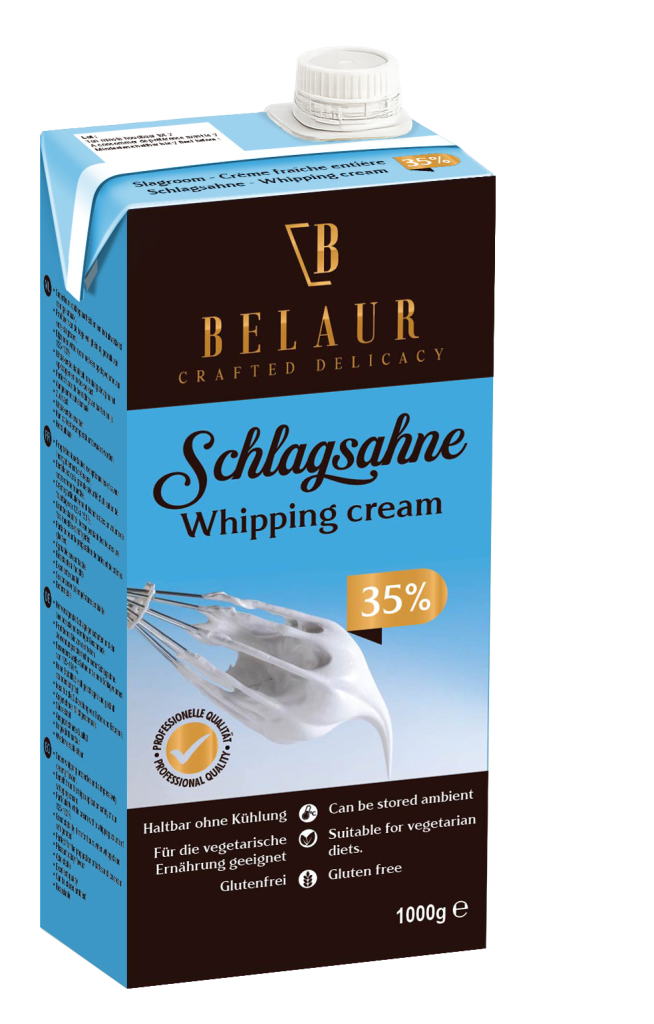
Cream generally needs at least 30% fat to whip into a stable foam, since the fat structure is what traps air and holds its shape. Belaur’s whipping cream range is formulated in the 30–35% range specifically to give consistent volume and stability for desserts, pastries, and dessert toppings.

26. Why did my whipping cream not hold its shape?

Whipped cream can lose structure if the cream is too warm, over-whipped, or has a lower fat percentage than the application requires. Chilling the cream, bowl, and whisk beforehand, and using a cream formulated for whipping stability rather than pouring, both help hold a firmer, longer-lasting peak.

27. Is there a shelf-stable whipping cream that doesn’t need refrigeration?

Yes — Belaur produces a long-life, ambient whipping cream that is heat-treated for shelf stability and doesn’t require refrigeration until opened, which is useful for foodservice operations managing stock across multiple locations or export shipments.

    Write us your enquiry

    Your Contact Details

    Blogs

    BRCGS Certification Explained for Ingredient Buyers | Belaur

    BRCGS Certification Explained: What It Means for Your Ingredient Supplier

    If you’re sourcing dairy, chocolate, or baking ingredients for your own food products, your supplier’s certifications aren’t paperwork — they’re a direct extension of your own food safety liability. BRCGS is one of the certifications you’ll see most often from European manufacturers. Here’s what it actually means.

    What is BRCGS?

    BRCGS (Brand Reputation through Compliance, Global Standards — formerly the British Retail Consortium standard) is one of the most widely recognized food safety certification schemes globally, and is benchmarked under the Global Food Safety Initiative (GFSI). It sets requirements across food safety management systems, site standards, product control, process control, and personnel practices.

    Why it matters when choosing a supplier

    Audited, not self-declared. BRCGS certification requires regular third-party audits of the facility — it isn’t a manufacturer simply stating they follow good practice. This gives you documented evidence you can pass up your own supply chain if a retailer or regulator asks for it.

    Reduces your own compliance burden. If you manufacture food products for retail or foodservice, your own certifications (often also BRCGS, or a GFSI-benchmarked equivalent) typically require you to demonstrate that your raw material suppliers meet an equivalent standard. Sourcing from a BRCGS-certified manufacturer simplifies that documentation.

    Signals process consistency. Beyond food safety, BRCGS covers process and quality control — meaning a certified facility is more likely to deliver consistent product specifications batch to batch, which matters for recipe formulation and finished-product consistency.

    What to ask a prospective supplier

    • Which BRCGS grade is the facility certified to, and when was the last audit?
    • Can they provide a copy of the current certificate and audit summary?
    • Does certification cover all products you intend to source, or only some product lines/facilities?

    Belaur’s approach

    Belaur’s products are produced according to BRCGS quality standards, with regular, strict audits carried out across our production facilities in Belgium, covering food safety, quality, environmental, and social standards. As a BRCGS-certified Belgian food ingredients manufacturer supplying wholesale and private-label customers, Belaur is built to meet the documentation standards food brands and manufacturers need from their supply chain. For food brands and manufacturers evaluating a European ingredient supplier, that certification is designed to remove a layer of due diligence from your sourcing process.

    Learn more about Belaur’s quality standards →

    How to Choose the Right Cooking Cream Fat % | Belaur

    How to Choose the Right Cooking Cream Fat % for Your Recipe

    Cooking cream isn’t a single ingredient — it’s a range, and the fat percentage you choose changes texture, stability, and what the cream can actually do in your recipe. Here’s a practical breakdown for foodservice and industrial kitchens choosing between light, standard, and double creams.

    Light cooking cream (10%)

    Best for: sauces, soups, and dishes where you want a creamy finish without heaviness or excess richness. At 10% fat, this cream pours easily and blends smoothly into hot liquids, but it isn’t stable enough to whip, and it has a lower tolerance for high-acid or high-heat applications compared to richer creams.

    Versatile cooking cream (20%)

    Best for: an all-purpose cream that handles most savory and sweet applications — gratins, pasta sauces, quiches, and lighter desserts. The 20% mark is often the sweet spot for kitchens that want to standardize on a single cream SKU rather than stocking multiple fat percentages.

    Double cream (45%)

    Best for: whipping, mousses, ganaches, and dishes that need real body and stability under heat — think reductions and cream-based sauces that need to hold their consistency without breaking. At 45% fat, double cream also whips to a stable, long-lasting volume, which lighter creams can’t achieve.

    Acid and heat stability matter as much as fat %

    Fat percentage tells you about richness and whipping potential, but for professional kitchens, acid- and heat-stability are just as critical — a cream that “breaks” or curdles when it hits a hot, acidic sauce (think tarte flambée or a wine reduction) is a production problem, not just a quality issue. This is where formulation matters more than the fat number alone: a well-formulated 10% cooking cream can outperform a poorly stabilized 20% cream in a demanding application.

    What about plant-based options?

    For dairy-free menus, a certified organic oat cooking cream (typically around 13% fat) can substitute in most savory applications, offering similar heat and acid stability to dairy cooking cream while being naturally lactose-free and vegan.

    Quick reference

    Fat %Best forWhips?
    10%Sauces, soups, light finishingNo
    13% (oat)Dairy-free savory & sweet dishesLimited
    20%All-purpose, gratins, quichesNo
    35%Tartes, desserts, gastronomyYes
    45%Mousses, ganaches, stable reductionsYes, high stability

    Belaur’s cooking cream range covers 10%, 20%, and 45% dairy options, a 30–35% whipping cream line, and a certified organic oat cream — all formulated for heat and acid stability in professional kitchens. As a Belgian cooking cream manufacturer supplying foodservice, hospitality, and industrial customers on a wholesale and bulk basis, Belaur formulates each fat percentage for consistent batch-to-batch performance.

    See Belaur’s full cooking cream range →

    Tourage Butter vs. Margarine for Croissant Lamination | Belaur

    Tourage Butter vs. Margarine for Croissant Lamination: What Industrial Bakeries Should Know

    For any bakery producing croissants, puff pastry, or viennoiserie at scale, the fat you laminate with is one of the biggest variables in the final product. Get it right and you get consistent, flaky layers batch after batch. Get it wrong, and you’re fighting butter leakage, uneven proofing, or a final product that doesn’t hold its shape. Here’s how tourage butter and margarine compare, and how to choose between them.

    What is tourage butter?

    “Tourage” comes from the French tourer — to fold or turn — and refers to the repeated folding process used to build the alternating layers of dough and fat in laminated pastry. Tourage butter is formulated specifically for this process: it has a higher melting point and greater plasticity than table butter, so it stays firm and workable through multiple folds and rolls, rather than melting into the dough or cracking under pressure.

    Tourage butter vs. margarine: the key differences

    Melting point and workability. Margarine is typically engineered with a wider plastic range, making it more forgiving on temperature-controlled production lines. Tourage butter demands tighter temperature control in the bakery, but rewards it with superior texture.

    Flavor. This is where butter wins decisively. A real butter lamination gives croissants their signature rich, dairy flavor that margarine — even high-quality margarine — can’t fully replicate. For any product positioned as “authentic” or “artisan,” butter is usually non-negotiable.

    Performance at scale. Margarine can offer more consistent behavior across varying ambient kitchen temperatures, which is why many industrial operations use a margarine lamination for cost and process stability, while premium or bakery-café lines use butter for differentiation.

    Cost. Margarine is generally the lower-cost option, which is why many manufacturers offer both a butter-laminated and a margarine-laminated version of the same product line, priced and positioned differently.

    Choosing the right fat for your production line

    If your priority is authentic flavor and a premium positioning, a dedicated tourage butter — like Belaur’s, formulated for consistent performance at industrial scale — is the right call. If your priority is process consistency across variable kitchen conditions or a lower price point, a light margarine lamination is a reasonable trade-off, and can still deliver a well-laminated, flaky product.

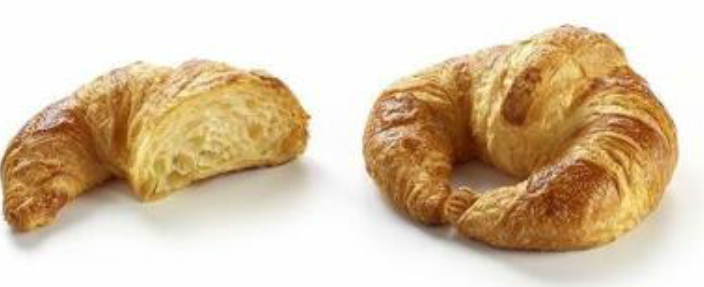
    Belaur supplies both: a tourage butter designed for professional bakeries and industrial manufacturers, and frozen ready-to-bake croissants made with either a straight butter lamination (19.5% real butter) or a curved croissant with a light margarine lamination — so you can match the fat to the product line rather than compromising on either.

    As a Belgian butter manufacturer supplying wholesale and bulk quantities to bakeries and food manufacturers across Europe and beyond, Belaur can advise on which lamination fits your specific production setup.

    Explore Belaur’s butter and frozen croissant range →